
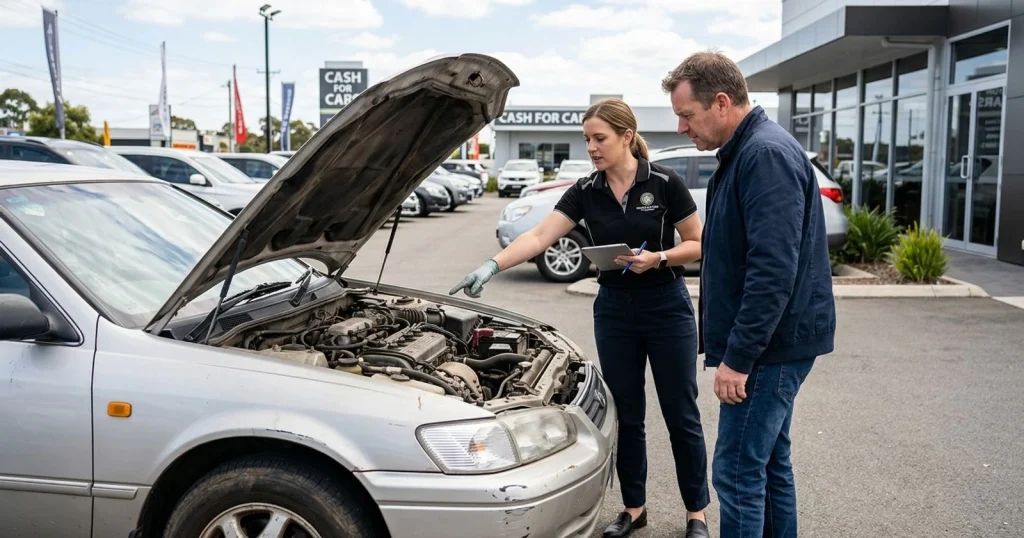
Dealers will keep accepting cars with warning lights, leaks, and worn brakes, but the offers will keep shrinking as auction risk and reconditioning costs get priced in more tightly. For Central PA owners, the smartest move is to find out what your car is worth as-is before you pay a mechanic a single dollar.
Can you trade in a car that needs repairs? Yes. The better question is whether a trade-in is the right transaction at all, and the only way to answer it is with a written number in your hand.
Table of Contents
- Yes, But Get an Offer First
- Should You Fix It Before Selling?
- Can You Trade In a Car That Needs Repairs With a Loan?
- Trade-In, CarMax, or Local Cash Sale?
- Frequently Asked Questions
Yes, But Get an Offer First
Dealers take cars with check-engine lights, leaks, bad brakes, transmission trouble, and accident damage. The offer simply reflects wholesale value, expected reconditioning, and auction risk, not what the car would fetch on a retail lot.
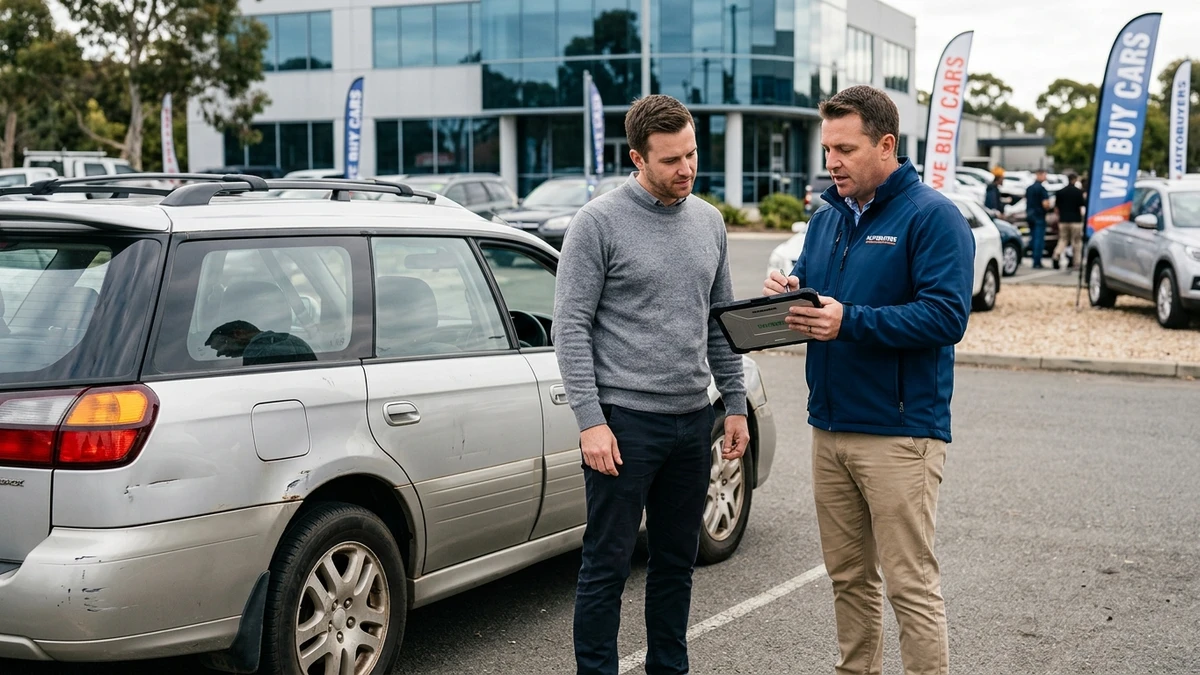
Consumer Reports notes that high-mileage or repair-needy trade-ins often go to auction instead of the dealer’s own lot, which is exactly why offers drop. The dealer is pricing in the repair and the chance it goes badly.
You are really choosing between three transactions:
- Dealer trade-in: convenient, but the value is tied to buying another vehicle.
- Direct cash sale: a written offer with no replacement purchase required.
- Private sale: the highest possible gross price, but you handle ads, strangers, payment risk, and disclosure.
That tie to a replacement purchase is the key difference. A trade-in blends your car’s value into a bigger deal, like a repair charge buried in a restaurant bill that also covers drinks, dessert, and tip. A cash sale shows you the number plainly.
Stop doing this: authorizing a repair to “make the car more sellable” before you know what the car is worth today. Get one written as-is offer first. Every later decision gets measured against it.
Should You Fix It Before Selling?
Run a simple test. Get a written as-is offer, then a repair estimate, then compare the credible increase in the offer (not the resale value you are hoping for) against what the repair will really cost you. That cost is the invoice plus diagnostic fees, towing, rental transportation, and the risk that a second problem shows up mid-repair. If the gap is smaller than the bill, stop spending.
Case-by-Case Calls
- Check-engine light: pay for a code scan first. A loose gas cap or bad sensor is cheap to fix. An internal engine fault is not.
- Failed transmission: it rarely earns back its cost. Our post on whether to fix your car before selling covers the logic.
- Worn brakes: inexpensive safety fixes can be worth it.
- Accident or structural damage: almost never worth fixing before a sale.
- Non-running car: ask what towing does to the offer before you pay for anything.
Cheap Prep That Pays Off
Some small jobs do help. Replace missing keys, gather your service records, vacuum and wash the car, and keep the printed diagnostic code report as evidence of what is actually wrong. These cost little and remove reasons for a buyer to discount.
Pro Tip: To prove a repair raised your offer, request a quote from the same buyer before and after the work and keep both in writing. If the second number does not beat the first by more than your bill, the repair lost you money.
Can You Trade In a Car That Needs Repairs With a Loan?
Yes. You do not need to own the car outright to get an offer, but the lender’s payoff has to be settled before the lien is released. Here is the Pennsylvania workflow:
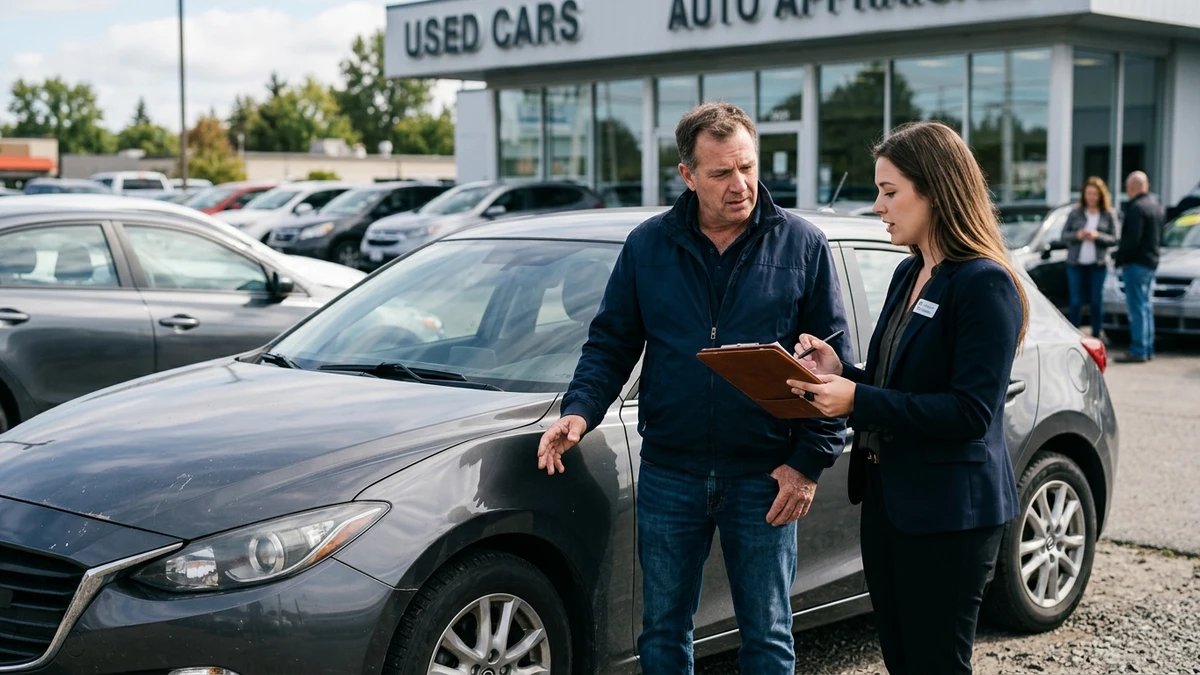
- Request a current payoff quote from your lender. Ask for the 10-day figure so it stays valid while the sale closes.
- Compare the payoff to the written offer.
- Ask who handles the lien release and title transfer, and how long the lender takes.
- Cover any shortfall, or ask whether a replacement lender will finance it.
Negative equity is the part that trips people up. An unpaid balance does not vanish in a trade. It gets rolled into your next loan or paid out of pocket, and a car that needs repairs is already worth less, so the gap is usually wider. Caribou’s guide to upside-down trades lays out the same sequence: appraisal, payoff quote, subtract the value, then pay or finance the difference.
Salvage-title and no-title cars can still be sold to the right buyer, with proof of ownership. Sell To Cramer buys cars with loans or liens, salvage titles, and no title. For the details, see our posts on negative equity and paperwork.
Bring this checklist:
- Title or lien information
- Registration
- Photo ID
- All keys
- Service records
- Accident history
- Any diagnostic codes
Registration is not proof of ownership. If your title situation is unusual, contact PennDOT or your lienholder before scheduling payment. Tax and paperwork treatment also differs between a trade-in and a cash sale, so confirm it with the dealer, PennDOT, or a tax professional.
Trade-In, CarMax, or Local Cash Sale?
A dealer trade-in is convenient, but you must buy another car, and the repair deduction is baked into a blended deal. Online appraisals from national retailers are fast, but offers are condition-adjusted and can change at inspection, and you may have to deliver the car.
A private sale can bring the most gross money, but you carry the ads, test drives, payment risk, and disclosure. A local cash sale gives you a written offer and no replacement purchase.
A Disclosure Script You Can Copy
Accurate disclosure protects your offer from being cut at pickup. Tell the buyer:
“The car has a check-engine light on and a slow oil leak. It starts and drives, but the brakes grind when stopping. It is missing one key. It has [clean/salvage] title. Here is the diagnostic code printout and my service records.”
Adjust it to your car, and be specific about warning lights, leaks, unsafe operation, missing parts, and whether it starts and drives.
When the Car Will Not Start or Pass Inspection
A dead car, a failed Pennsylvania inspection, or a required tow changes the offer, so say so upfront and ask how towing is handled. Sell To Cramer, family-owned since 1939 with same-day payment and no haggling, gives a written offer in about 60 seconds and buys cars in these conditions.
The winning workflow is short: get the as-is offer, compare it against repair cost and loan payoff, then decide. If the offer beats what the repair would return, you skip the mechanic and the dealership entirely. Get My Cash Offer and know what your car is worth today before you spend another dollar.
Frequently Asked Questions
Will a dealer take a car that does not run?
Many will, but the offer drops to reflect towing and reconditioning. Ask any buyer how a non-running car changes the number before you commit.
Should I fix a check-engine light before trading in?
Get the code scanned first. If it is a cheap fix like a gas cap or sensor, it may be worth doing. If it points to an internal engine fault, get an as-is offer before spending.
Can I sell a car I still owe money on?
Yes. Request a payoff quote from your lender, compare it to the offer, and settle the difference. The lien must be released before the title can transfer.
Can I sell a car with no title or a salvage title?
Yes, with the right buyer and proof of ownership. Contact PennDOT or your lienholder first if your title situation is unusual.
Is a private sale always the best price?
Not always. It may bring a higher gross price, but it costs you time, repair or disclosure prep, and payment risk.