
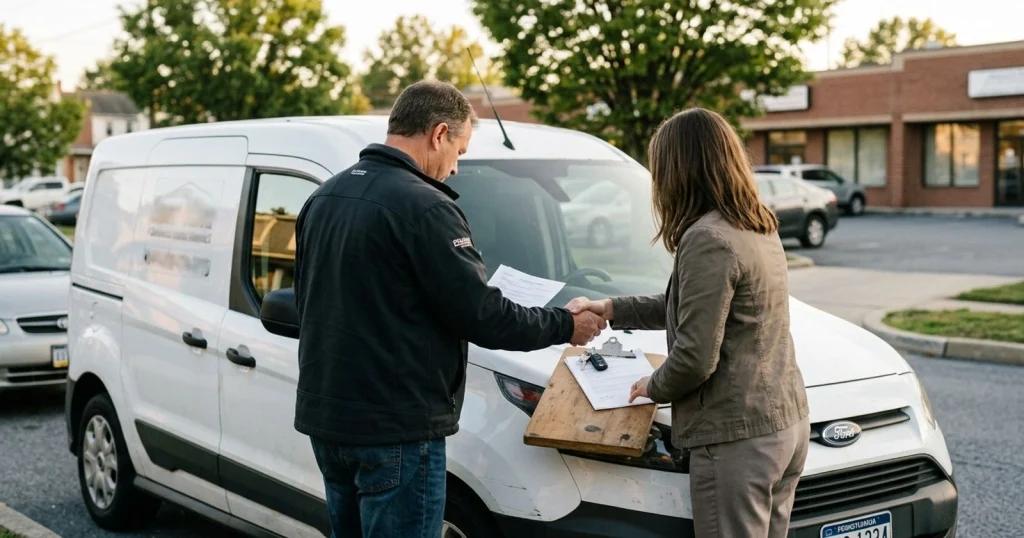
A Pennsylvania plumbing contractor’s old pickup, titled to the LLC and still carrying a loan, can leave the lot in one day if the right person signs and the lender gets paid first. Most owners in Central PA do the opposite. They list the truck, wait weeks for showings, and discover the title problem only after a buyer shows up with cash.
Selling a business vehicle in PA is a paperwork problem before it is a pricing problem. Your sale is an ordinary one-vehicle transaction, the buyer carries the 6% sales tax, and your real attention belongs on the title signature, the lien, and the depreciation you already claimed.
What You’ll Need
- The title, with the registered owner’s exact name (LLC, corporation, or individual)
- A document proving your authority to sign, such as an operating agreement or corporate resolution
- A lender payoff letter if any loan or lien is on the vehicle
- Your depreciation records, so your CPA can calculate gain or loss
- A bill of sale and an odometer disclosure
Table of Contents
- Who Actually Owns the Title?
- Does Sales Tax Apply to Your Sale?
- Selling a Business Vehicle in PA With a Loan or Lien
- Skip the Listing and Sell Fast
- Frequently Asked Questions
Who Actually Owns the Title?
Start by reading the name on the title. It might be an LLC, a corporation, a sole proprietor, or an employee who bought the vehicle years ago. Whoever is named there controls the sale, and the buyer will check it first.
Pennsylvania requires a vehicle dealer license if you sell five or more motor vehicles in a calendar year, according to DealerVLO’s licensing guide. A business unloading one tired van or pickup is nowhere near that line. Treat it as a one-time cash sale, not dealing.
When the title reads “Smith Plumbing LLC,” an authorized officer or member signs. They write their role beside the signature, for example “Jane Smith, Member.” Keep the operating agreement or a corporate resolution nearby in case the buyer asks for proof.
Three edge cases stall sales more than anything else:
- Title in a former partner’s name. That person must sign, or you need documentation showing the transfer of their interest.
- Dissolved LLC. Someone with winding-up authority must still be able to sign, so sort out who holds that authority before you list anything.
- Vehicle never retitled after a business purchase. You are not yet the owner of record, so the chain of ownership must be fixed first. A PA title transfer cleans that up.
Does Sales Tax Apply to Your Sale?
For a one-time sale of a vehicle your business owns, the buyer pays Pennsylvania’s 6% sales and use tax when they title and register it. That filing runs through PennDOT’s MV-4ST form, as Carcamo Consulting’s LLC transfer guide describes. As the seller, you generally do not collect or remit it on a casual sale.
One exception deserves a quick check. If your business holds a PA sales tax license and regularly sells equipment, confirm with the Department of Revenue or your CPA before assuming this sale sits outside your filing duties. The Pennsylvania sales tax guide explains the registration and filing side.
Your own tax attention belongs elsewhere. The sale produces a gain or a loss, and any depreciation you took under Section 179 or bonus depreciation can come back as recapture. Both flow to your federal return and then to Pennsylvania income tax. BizTaxWize lists the corporate rate at 9.0% and pass-through income at up to 3.1%.
A plain rule of thumb works here:
- Sell for less than your remaining tax basis, and you book a loss.
- Sell for more than your remaining tax basis, and expect recapture.
- Document the sale price and date either way.
Pro Tip: Hand your CPA the bill of sale and your depreciation schedule the same week you sell. Recapture surprises almost always come from vehicles written down aggressively and then sold for more than anyone expected.
Selling a Business Vehicle in PA With a Loan or Lien
Business vehicles rarely come clean. A truck financed through the company, an equipment loan with a lien on the title, a salvage-branded unit, or a title lost in an office move: these are the normal situations, not the exceptions.
The lien payoff follows a set sequence:
- Request a payoff letter from the lender.
- Have the buyer pay the lender directly for the payoff amount.
- Receive the lien release and clean title, or request a duplicate title through PennDOT if the original is gone.
- Complete the transfer once ownership is properly documented.
If the payoff is higher than the vehicle is worth, you cover the gap. Our guide to selling with negative equity explains how owners handle that shortfall.
Salvage and no-title vehicles add friction on a retail listing. Most private buyers walk away, and national retailers often decline salvage units or certain commercial vehicles. One CarMax guide notes this, and it assumes a clean personal title.
Sell To Cramer buys vehicles with loans or liens, salvage titles, and no title. A small business skips weeks of paperwork it would face with a retail listing.
Skip the Listing and Sell Fast
Compare your options by what each costs you in time and certainty, not by headline price alone. A private sale is like running a second business on the side: you take on the showings, the no-shows, and the title questions above.
- Private buyers: Highest potential price, but you absorb strangers at your shop along with the paperwork.
- Trade-in: Convenient if you are buying another vehicle, though offers often run lowest, and an LLC-held title can complicate it.
- Direct cash buyer: Fast, certain, and free of haggling.
Speed carries real business value. Every week a work truck sits, you pay for insurance, registration, and parking, and the cash stays locked up. A same-day payout often beats squeezing out a few more hundred dollars after a month of waiting.
Run through this checklist before the buyer arrives:
- Title signed by the correct entity signatory
- Lien payoff letter, if applicable
- Bill of sale and odometer disclosure
- Plates removed after the sale
- Insurance policy cancelled or updated once the vehicle is gone
Pro Tip: Photograph the signed title and bill of sale before handing anything over. Your records are your protection if a question surfaces at tax time.
The Middletown team is family-owned since 1939 with same-day payment and no haggling. You can get an instant online cash offer in about 60 seconds, and they handle the lien, title, and PennDOT paperwork on their side. Selling a business vehicle in PA does not need to take weeks. Get My Cash Offer and see what your work truck is worth today.
Frequently Asked Questions
Do I need a dealer license to sell my company’s vehicle in PA?
Generally no, for occasional sales. The line to watch is five or more vehicles in a calendar year, which triggers licensing under the rules summarized by DealerVLO. One aging truck is far below it.
Who pays PA sales tax when a business sells a vehicle?
Typically the buyer, who pays 6% when titling and registering the vehicle through PennDOT. The exception is a seller acting as a licensed dealer, or a business with sales tax licensing duties that should be confirmed with a CPA.
Can I sell a business vehicle if the title is in the LLC’s name and I’m not the owner of record?
Only an authorized signer can transfer it. Be ready with the operating agreement or a corporate resolution showing that person’s authority, and write their role beside the signature.
What happens to the plates and insurance after the sale?
Remove the plates, notify your insurer, and keep a copy of the bill of sale. Doing this the same day protects you from liability for anything that happens after the vehicle changes hands.
Will I owe tax on the sale price?
Possibly. You may owe tax on a gain or on depreciation recapture, depending on your remaining basis. Confirm the numbers with your CPA.