
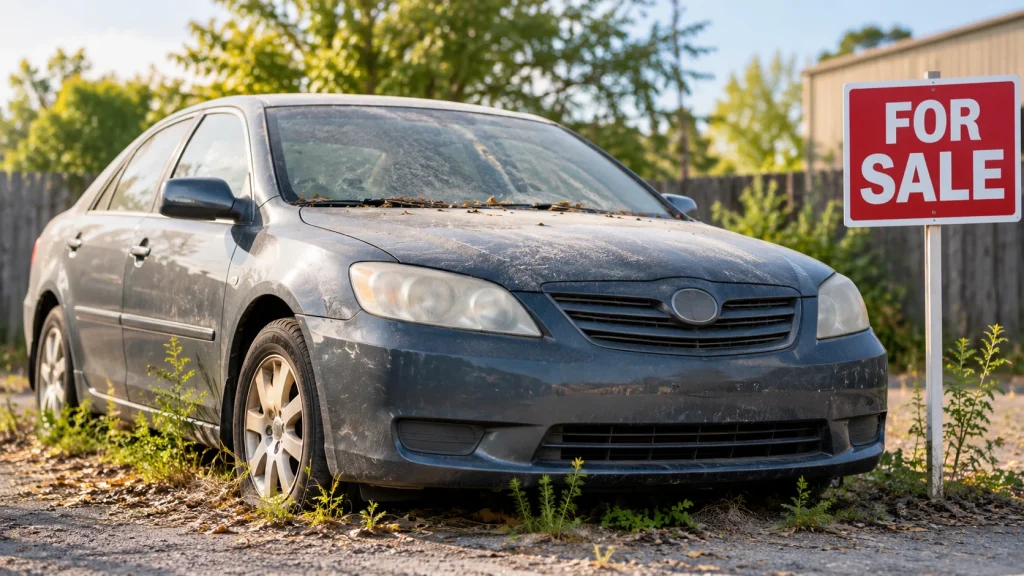
A car that hasn’t moved in eight months isn’t automatically dead. It also isn’t automatically fine. Most owners guess wrong in one direction or the other, and that guess costs them either a wasted repair bill or a sale price far below what the car is actually worth.
The real question behind how to sell a car that has been sitting isn’t “is it dead.” It’s which category the car falls into, and what that category actually pays.
Key takeaways:
- Storage time predicts damage: weeks hurt the battery, months hurt the fuel system, years hurt everything including the frame.
- The average U.S. vehicle is nearing 13 years old in 2026, so a stored car isn’t rare, it’s the market norm.
- A simple 3-tier framework tells you fast whether your car is retail-worthy, repair-worthy, or cash-buyer territory.
- Expired PA registration, missing titles, and old liens block most private sales on stored vehicles.
- Repair costs on a car sat over a year often exceed what the repair adds back in resale value.
What Actually Happens to a Car That Sits for Months or Years for How To Sell …
A parked car doesn’t just wait patiently. It degrades on a schedule, and the schedule matters more than most sellers realize.
The timeline looks roughly like this:
- Weeks 1-3: Battery voltage drops, especially in Central PA’s cold snaps. A car that won’t turn over after a month is usually just a dead battery.
- 3-6 months: Fuel starts breaking down. Ethanol-blended gas separates and gums up injectors and fuel lines.
- 6-12 months: Tires develop flat spots from sitting in one position. Brake rotors surface-rust where the pads sat.
- 12+ months: Seals and gaskets dry out and crack. Rubber hoses stiffen. Rodents move into engine bays and cabin filters.
According to Autobody News citing S&P Global Mobility, the average light vehicle on U.S. roads is already around 12.8 years old. CCC Intelligent Solutions projects that average will hit roughly 13 years in 2026. A stored car isn’t an anomaly against that backdrop. It’s part of a bigger pattern of owners holding onto vehicles far longer than they used to.
Weather Makes It Worse in Central PA
Cars stored outside in Dauphin, Cumberland, or Lancaster counties take extra damage from freeze-thaw cycles and humidity swings. Rust accelerates on brake lines, exhaust components, and rocker panels. A car parked under a carport in Harrisburg for two winters looks noticeably worse than one stored in a heated garage for the same stretch.
Figure Out Which Category Your Car Falls Into First
Before you list it, repair it, or call anyone, run your car through this quick framework. It takes ten minutes and saves you weeks of wasted effort.
Tier 1: Sat under 3 months, starts or turns over, no major issues.
This car still has retail or private-sale value. A jump start, an oil change, and a wash usually get it road-ready. List it normally.
Tier 2: Sat 3 months to 2 years, needs battery, tires, or fuel system work.
This is the trap zone. Repairs often cost more than they add to resale value, especially on a car already worth $5,000-$10,000.
Tier 3: Sat 2+ years, won’t start, flat tires, rodent damage, visible rust.
This is cash-buyer territory, not private-sale territory. Nobody test-drives a car with a nested engine bay.
Sellers consistently overestimate their tier because they’re pricing a memory, not the vehicle sitting in the driveway today. What the car was worth the day you parked it has no bearing on what it’s worth now. Judge the car in front of you, not the one in your head.
The Paperwork Problems Nobody Warns You About
Mechanical issues get all the attention. Paperwork kills more sales.
A stored car almost always has an expired Pennsylvania registration and inspection sticker. That alone blocks a private buyer from legally test-driving the car, and it stops most financing arrangements before they start. If your car sat long enough, the registration didn’t just lapse, it lapsed years ago. Reviewing the pa emissions test requirements and sell car with expired registration rules ahead of time saves a wasted trip to PennDOT.
Titles cause the bigger headache. A car parked for two or three years often outlives the paperwork trail behind it. Common problems include:
- Lost or misplaced titles, which require a duplicate title application before any sale
- Liens still on record from a loan that was paid off years ago but never formally released
- Out-of-state titles left over from a move, with no PA title ever issued
Chasing down a lien release on a loan you paid off in 2019 means calling a bank that may have merged, changed servicers, or archived the record.
This is exactly where a buyer experienced with sell car with a loan, sell car with no title, and out of state title pa situations is worth far more than the hassle of doing it yourself. One phone call replaces weeks of paperwork chasing.
For a full rundown of what you’ll need either way, the paperwork to sell car guide covers it.
Why Reviving a Stored Car Rarely Pays Off in Central PA
Here’s the math most sellers skip before they start ordering parts.
A car that’s sat over a year typically needs several repairs at once, not just one:
- Battery replacement: $150-250
- Fuel system flush: $200-500
- New tires (flat-spotted or dry-rotted): $400-800
- Brake service (rusted rotors, seized calipers): $300-600
Add those up and you’re often past $1,000-$2,000 before the car is even reliably drivable. Now compare that against what the car actually competes with. Edmunds’ Q2 2026 report found that vehicles priced $5,000-$10,000 already average 10.7 years old with over 120,000 miles on the odometer.
Your stored car isn’t entering a scarce market. It’s entering a segment already flooded with high-mileage vehicles buyers expect to negotiate down, the same way a used mower or grill gets haggled over at a yard sale.
If your odometer is part of the problem, the guide on how to sell high mileage car breaks down what still moves in this range.
The Real Cost of a Private Sale
After repairs, listing fees, and weeks fielding no-show buyers and lowball texts, many sellers net less than a same-day cash offer pays right now. Time has a cost too, and a stored car has already cost you enough of it.
An instant online cash offer skips that guesswork entirely. Enter the vehicle details, get a real written number in about 60 seconds, and know exactly where you stand before spending a dollar on repairs. We’ve run this model since 1939, family-owned, with same-day payment and no haggling over the number you’re quoted.
What Most Guides Get Wrong About Stored Cars
Most articles treat a sitting car as either a normal used-car listing or scrap metal with nothing in between. That framing misses the majority of real cases, and it’s part of why so many owners stay stuck longer than they need to.
Two details rarely get mentioned:
- Uninsured storage risk. A car sitting without active insurance on a Middletown property is exposed if it’s damaged, stolen, or involved in an incident while parked. Selling it faster removes that liability.
- The “complete vehicle” rule. Cash buyers pay more when the car is intact, even non-running. Don’t strip parts off before selling, thinking you’ll recoup value separately. It usually costs you more than it earns.
A third case worth naming: inherited vehicles that sat untouched during probate often carry both storage damage and paperwork gaps at once. If that’s your situation, selling an inherited car walks through the extra steps involved. And if the car came with heavy rust or a branded title from a past claim, selling a salvage title car is worth reading before you assume it’s worthless.
If your car has sat long enough that you’re asking how to sell a car that has been sitting, the honest answer is simple. Stop guessing which tier it’s in and get a real number. Get My Cash Offer at https://selltocramer.com/ and find out in about 60 seconds whether your car is worth repairing or worth selling as-is today.
Frequently Asked Questions
Can I sell a car that has been sitting without a title?
Yes, in many cases. A cash buyer experienced with no-title situations can walk you through a duplicate title application or complete the purchase using alternate documentation, depending on your specific case.
Will a dead battery ruin my chances of selling the car?
No. A dead battery after a few weeks or months of sitting is a minor, cheap fix and doesn’t significantly affect what a cash buyer offers. It’s a much bigger problem for private buyers who need to test-drive the car themselves.
Does an expired PA registration stop me from selling my car?
It stops most private sales and test drives, since PA requires valid registration and inspection for legal road use. A direct cash buyer can still buy the vehicle without you renewing registration first.
How much does it cost to get a stored car running again?
For a car sat over a year, expect $1,000-$2,000 combined for battery, fuel system service, tires, and brake work. That cost often exceeds what the repairs add back in resale value on an older, high-mileage vehicle.
What if there’s still a loan or lien on my stored car?
A buyer experienced with loans and liens can look up the payoff amount and handle the release directly, even if the original paperwork is years old or hard to track down.