
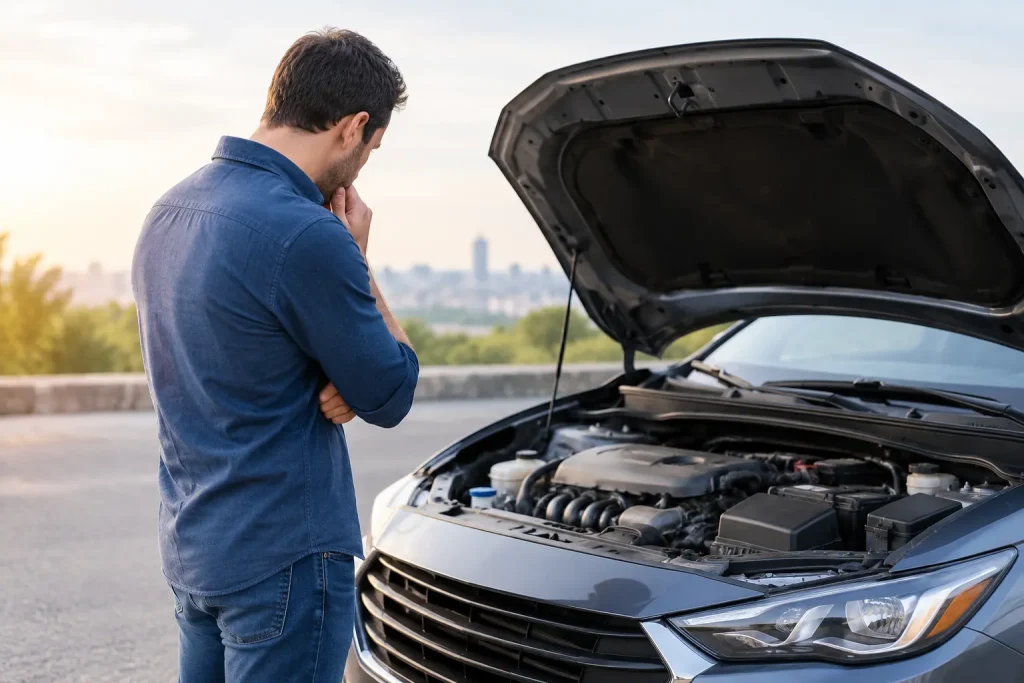
A blown engine doesn’t total your car. It just changes who’s buying and how fast you need to move, because interest, towing costs, and falling scrap values start eating your payout the moment the engine seizes. Selling a car with a blown engine PA the right way means running the actual numbers first, then knowing exactly which paperwork rules apply and which buyer pays cash today instead of next month.
Key Takeaways
- A blown engine can cut a car’s value to roughly 35% of its running price, according to JunkCarValueGuide’s 2026 data.
- Full engine replacement runs $7,000 to $12,000+, while a rebuild often costs $4,000 to $8,000, per Peddle’s 2026 figures.
- 2026 used-car prices remain historically high, with Cox Automotive reporting averages near $26,000 to $27,000, which helps clean-body, dead-engine cars sell for more than owners expect.
- Pennsylvania law doesn’t require a running vehicle to transfer title, and loans, liens, or missing titles don’t block a sale.
- A same-day cash offer typically beats months of DIY repair attempts or slow private-sale listings.
Table of Contents
- Is It Worth Fixing a Blown Engine or Just Selling It in PA
- What PA Law Actually Requires When Selling a Car With a Blown Engine
- Still Owe Money on a Car With a Blown Engine Heres the Real Process
- Where Central PA Owners Get Stuck Selling a Blown Engine Car
- Frequently Asked Questions
Is It Worth Fixing a Blown Engine or Just Selling It in PA
Run the math before you call a mechanic. A sedan worth $7,000 to $9,000 running can drop to roughly $2,000 to $3,000 the moment its engine fails, based on JunkCarValueGuide’s 35% valuation adjustment for 2026. That’s most of the car’s value gone overnight, not a small dip.
Now weigh that against the repair bill. Peddle’s 2026 data puts full engine replacement at $7,000 to $12,000 or more, with a rebuild landing closer to $4,000 to $8,000. For a car that was worth $8,000 before the engine died, spending $7,000 to fix it rarely makes sense. It’s the automotive version of putting a new roof on a house you’re about to sell for the land value.
Why Selling Non-Running Still Pays Well in 2026
Here’s what most owners miss. Used-car prices are unusually high right now, with Cox Automotive reporting national averages near $26,000 to $27,000 through mid-2026, and Edmunds clocking a record $32,461 average for three-year-old vehicles. That pricing pressure trickles down.
Buyers who rebuild engines or part out clean-body vehicles pay more for a dead-engine car today than they would have two or three years ago, since sourcing a good replacement engine or a low-mileage donor body costs more too.
A simple rule cuts through the noise: if the repair estimate exceeds 50% of the car’s current running value, selling as-is usually wins. A $4,000 rebuild on a car worth $6,000 running might make sense. A $9,000 replacement on that same car almost never does.
What PA Law Actually Requires When Selling a Car With a Blown Engine
Pennsylvania doesn’t care whether your engine runs. State law only requires a valid title and an odometer disclosure to transfer ownership, according to BillOfSaleNow’s Pennsylvania guides. That single fact should erase most of the panic owners feel about selling a car that won’t start.
Selling As-Is the Right Way
Selling “as-is” in PA is legal and common, but it comes with one non-negotiable step: disclosure. BillOfSaleNow’s guidance is direct on this point, listing major mechanical failures, including cracked engine blocks or heads, among the defects a seller must put in writing. Skipping this step invites a dispute later, even in a private sale.
A clean as-is bill of sale should include:
- A clear statement that the vehicle is sold as-is, with no warranty
- Specific mention of the blown engine or known mechanical failure
- The odometer reading at time of sale
- Both parties’ signatures and the sale date
What a Salvage Brand Changes
If an insurer already declared the car a total loss, PennDOT brands the title as Salvage, Reconstructed, or Non-Repairable. That brand shrinks the buyer pool since a reconstructed vehicle needs an enhanced VIN inspection before it can be driven again. It doesn’t stop a sale, but it does shift the car toward parts and scrap buyers rather than daily drivers.
A missing title isn’t a dead end either. PennDOT issues replacement titles, and some buyers handle no-title purchases directly, which keeps the timeline short instead of stuck in paperwork limbo.
Still Owe Money on a Car With a Blown Engine Heres the Real Process
Owing money on a car that won’t run feels like a trap, but it isn’t one. The lienholder still holds the title, so the first move is calling them for a payoff quote. That number tells you exactly what has to be settled before ownership can transfer.
From there, the process depends on who’s buying:
- Get the exact payoff amount and any per-day interest accrual from the lender.
- Get a cash offer on the blown-engine vehicle.
- Confirm the buyer can pay the lienholder directly rather than routing funds through you.
- Collect any difference between the offer and the payoff as your net proceeds.
Buyers experienced with loans or liens handle step three routinely, which means the seller never fronts cash or juggles two separate transactions.
Ask your lienholder for a payoff quote with a 10-day expiration window, not just a same-day figure. Interest keeps accruing daily on a car that isn’t running, and a stale payoff quote can leave you short at closing.
Negative equity, where the payoff exceeds the blown-engine value, is common on newer vehicles with big loans. In that case, the seller typically covers the gap out of pocket or rolls it into a new purchase. Waiting doesn’t help either way. Every extra week means more interest charges piling onto a car that’s losing value, not gaining it.
Where Central PA Owners Get Stuck Selling a Blown Engine Car
Most sellers try the free route first, and most of them lose weeks doing it. Listing a non-running car on Facebook Marketplace usually brings a flood of lowball offers, no-shows, and buyers who vanish once they hear “blown engine.” Reddit threads discussing cars that need engine work echo the same pattern: private buyers want a discount far steeper than the car’s real value loss justifies.
The Towing Trap
Getting a non-running car anywhere costs money before a single offer even lands. Local towing typically runs $75 to $150, and that’s paid upfront with no guarantee the buyer follows through. Sellers who tow to a dealership first often eat that cost twice.
Why Big Chains Say No
Large used-car retailers built for running, inspection-ready vehicles typically decline non-running cars outright. That wastes a trip and, often, a tow fee. It’s a mismatch between what these buyers are set up to process and what a blown-engine car actually needs.
The faster path skips all of it:
- Get an instant online cash offer in about 60 seconds
- Skip the tow, since pickup is handled for you
- Get paid the same day, with no haggling over a car that can’t be driven anyway
That’s the model Sell To Cramer built: family-owned since 1939, with same-day payment and no haggling. For a Central PA owner in Middletown, Harrisburg, or across Dauphin, Cumberland, and Lancaster Counties, that combination turns a weeks-long headache into an afternoon.
If your car sits with a dead engine right now, running the numbers above should already tell you which way to go. Get My Cash Offer at selltocramer.com and skip the repair shop entirely.
Frequently Asked Questions
Can I sell a car with a blown engine in Pennsylvania without a title?
Yes, a missing title doesn’t block a sale in PA. PennDOT issues replacement titles, and some buyers work directly with sellers who don’t have the original paperwork on hand.
Is it legal to sell a car as-is with a known blown engine in PA?
Yes, as long as you disclose the defect in writing. BillOfSaleNow’s Pennsylvania guidance specifically lists cracked engine blocks and heads among the mechanical issues that must be disclosed before an as-is sale.
How much does a blown engine reduce a car’s value?
JunkCarValueGuide’s 2026 data shows a blown engine can cut a car’s value to roughly 35% of what it was worth running. A $9,000 car might drop to around $3,000 once the engine fails.
Should I repair the engine or sell the car as-is?
If the repair cost exceeds 50% of the car’s running value, selling as-is usually makes more financial sense. With replacements running $7,000 to $12,000 and rebuilds at $4,000 to $8,000 per Peddle’s 2026 figures, that threshold hits fast on older vehicles.
What if I still owe money on a car with a blown engine?
Contact your lienholder for a current payoff quote first. A buyer who purchases cars with active loans or liens can pay the lender directly, so you only collect the difference instead of fronting cash yourself.