
Most people searching for how to sell an inherited car in Pennsylvania stop researching the moment they find the right PennDOT form, then discover the real problem starts after the paperwork. Getting the title transferred is only half the job. You still have to find a buyer willing to close the sale the same day, without more forms, more waiting, or another trip to a tag agent.
That second half is where most guides quietly give up, and where Central PA heirs and executors lose the most time.
Key takeaways
- Pennsylvania has no Transfer-on-Death vehicle title, so every inherited car moves through survivorship, small-estate petition, or full probate.
- PennDOT Form MV-39 must be signed and notarized before any transfer or sale can happen.
- Estates with $50,000 or less in personal property can often skip formal probate.
- Lienholders must release the title before an heir or buyer can take ownership.
- Cash-for-cars buyers who handle liens, missing titles, and probate paperwork on the spot can turn a stalled inheritance into same-day money.
Sell An Inherited Car In Pennsylvania
Pennsylvania does not offer a Transfer-on-Death designation for vehicle titles. That single fact surprises a lot of families, because some states let you name a beneficiary right on the title. Here, every inherited car has to pass through one of three legal paths before anyone can sign it over to a buyer.
The three ownership paths in 2026:
- Surviving spouse or joint owner with survivorship rights. Ownership passes automatically. The survivor corrects the title using Form MV-39 and a certified death certificate, no probate needed.
- Small-estate petition. If the deceased’s personal property, including the car, totals $50,000 or less, heirs can skip formal probate and use a simpler court filing instead.
- Formal probate through the county Register of Wills. Required for larger estates or when no simpler path applies. The executor gets letters testamentary (with a will) or letters of administration (without one).
An executor’s authority comes directly from those letters. Without them, PennDOT and most buyers won’t process a sale, no matter how clear the family’s intentions are.
The process looks the same whether you’re filing in Dauphin, Cumberland, Lancaster, or Philadelphia County. Each Register of Wills office handles its own local paperwork, but PennDOT’s title rules don’t change across county lines.
Documents Needed to Sell an Inherited Vehicle
Selling an inherited vehicle in Pennsylvania means gathering paperwork before you ever talk to a buyer. Missing even one document is the most common reason a sale stalls for weeks instead of closing in a day.
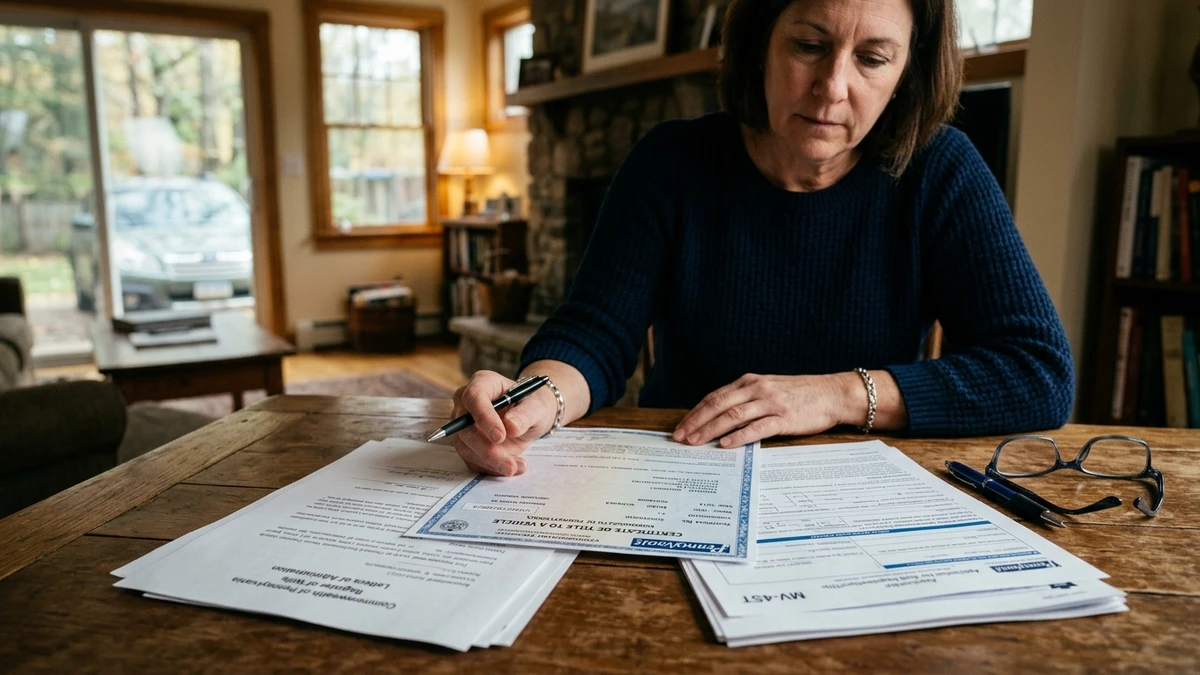
The core document checklist
- A certified death certificate (not a photocopy)
- The original vehicle title
- PennDOT Form MV-39, Notification of Assignment of Title Upon Death
- Form MV-1, Application for Certificate of Title, where applicable
- Government-issued photo ID for the person signing
When an affidavit works, and when it doesn’t
An affidavit of inheritance vehicle can work for straightforward small-estate cases, where one clear heir is claiming the car and no one disputes it. Formal probate cases usually require a short certificate from the Register of Wills instead, proving the executor’s authority in writing. Buyers and PennDOT agents will ask for whichever document matches your ownership path.
Every signature on the title and the MV-39 must be notarized. A notary public confirms identity and witnesses the signing. PennDOT will reject unnotarized paperwork outright, no exceptions.
If the deceased still owed money on the car, contact the lienholder before you do anything else. The lienholder must issue a lien release before the title can move to an heir or a buyer. That release can take longer to arrange than the rest of the paperwork combined. If you’re gathering the paperwork to sell car titles in an estate situation, start the lienholder call early.
Step-by-Step Process to Transfer and Sell the Car
Once you know your ownership path and have your documents, the transfer itself follows a predictable sequence. Skipping a step here is what turns a same-day sale into a three-week delay.
- Confirm your ownership path. Check the title for joint ownership language, then confirm whether the estate qualifies as a small estate or needs full probate.
- Gather every document from the checklist above. Missing paperwork is the single biggest cause of transfer delays.
- Complete and notarize Form MV-39. This tells PennDOT the titled owner has died and names who now has authority over the vehicle.
- Get court authorization if you’re in probate. Executors need their short certificate or letters testamentary in hand before signing anything.
- Transfer the title through PennDOT or an authorized agent. This can include a notary, tag service, or dealer set up to process title work.
For a closer look at how title reassignment works after a death, Michigan’s own title transfer upon death form shows how similar the documentation requirements are across states, even though Pennsylvania’s own MV-39 process governs the actual sale here.
When multiple heirs are involved
If several heirs inherit the same vehicle, all of them typically need to sign off on the sale. Alternatively, the heirs can sign a notarized agreement designating one person to act on everyone’s behalf. Either approach satisfies PennDOT, but skipping this step is a common reason private sales fall through at the last minute.
Both buyer and seller signatures are required on the title to finalize any sale, whether you’re selling to a private buyer, a dealership, or a cash-for-cars service.
Court involvement becomes unavoidable in a few specific situations: contested estates, a missing will combined with an estate over the small-estate threshold, or disputes between heirs about who has authority to sell.
An estate vehicle with an outstanding loan adds another layer, since sell car with a loan situations require the lienholder’s release before any buyer can legally take the title.
Fastest Way to Turn an Inherited Car Into Cash in Central PA
Here’s where most articles about how to sell an inherited car in Pennsylvania stop, right after explaining the forms. Finishing the title transfer doesn’t put money in your pocket, though. You still need a buyer who won’t send you back to PennDOT for one more piece of paperwork.
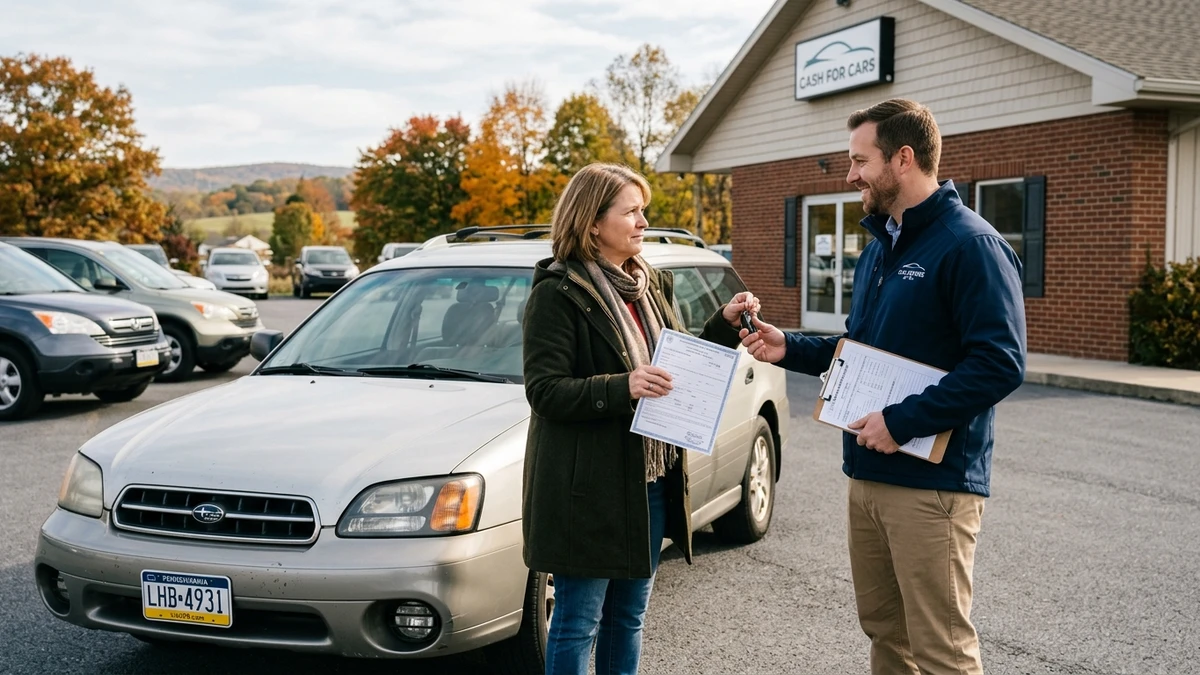
This is exactly where dealerships and cash-for-cars services earn their keep. A buyer experienced with estate vehicle sale Pennsylvania transactions can review your MV-39 and short certificate on the spot, coordinate directly with a lienholder on payoff, and finish the title paperwork the same day you show up.
That single-visit approach saves executors from separate trips to a notary, PennDOT agent, and buyer, the kind of running around that turns a one-hour errand into a lost afternoon.
We buy cars with loans or liens, salvage titles, and even vehicles with no title at all, the exact situations that stall private sales and dealer trade-ins.
Family-owned since 1939 with same-day payment and no haggling, our instant online cash offers give heirs and executors a real number in about 60 seconds.
Whether you’re settling an estate in Middletown, Harrisburg, Pittsburgh, or Philadelphia, that combination of speed and paperwork know-how solves the part of the process most guides leave out entirely. Our car selling guides cover more edge cases, from missing titles to co-signed loans, if your estate sale involves either.
If you’re holding an inherited title, a stack of PennDOT forms, and a car you need gone, get a written offer in about 60 seconds and same-day payment. Get My Cash Offer.