
Remove Before Selling Your Car
Most sellers empty the glovebox, grab the sunglasses, and call it done. The items that cause real trouble are the ones nobody thinks to look for.
A garage door opener clipped to the visor, a toll transponder behind the mirror, and a phone still paired to the dashboard all give the next driver access to your life. A forgotten E-ZPass can keep charging your account for someone else’s trips on the Pennsylvania Turnpike.
The opposite mistake costs money too. Some owners strip the spare tire, the factory floor mats, or the original radio, thinking those parts are worth more on their own. Buyers notice missing equipment, and the offer drops by more than those parts would bring in a resale. In Pennsylvania, your license plate stays with you, not the car. That small detail changes what you do on sale day.
Cars arrive at Sell To Cramer with everything from forgotten registration cards to child seats still buckled in the back. The checklist below covers what to take, what to wipe, and what to leave alone. Work through it once, and you protect your data, your accounts, and the price you get. It takes about an hour.
Table of Contents
- Everything Inside the Car Comes Out
- How to Wipe a Connected Car
- Parts You Should Never Pull Off
- Before Payment and After Payment in Pennsylvania
Everything Inside the Car Comes Out
These are the items sellers leave behind most often:
- Registration, insurance cards, and receipts in the glovebox
- Prescription medication
- Loose change and cash
- Phone chargers and cables
- Child car seats
- Tools and emergency kits
- Garage door remotes
- Toll transponders like E-ZPass
- Parking permits
- SD cards from dash cams and USB drives
Search the Hidden Spots First
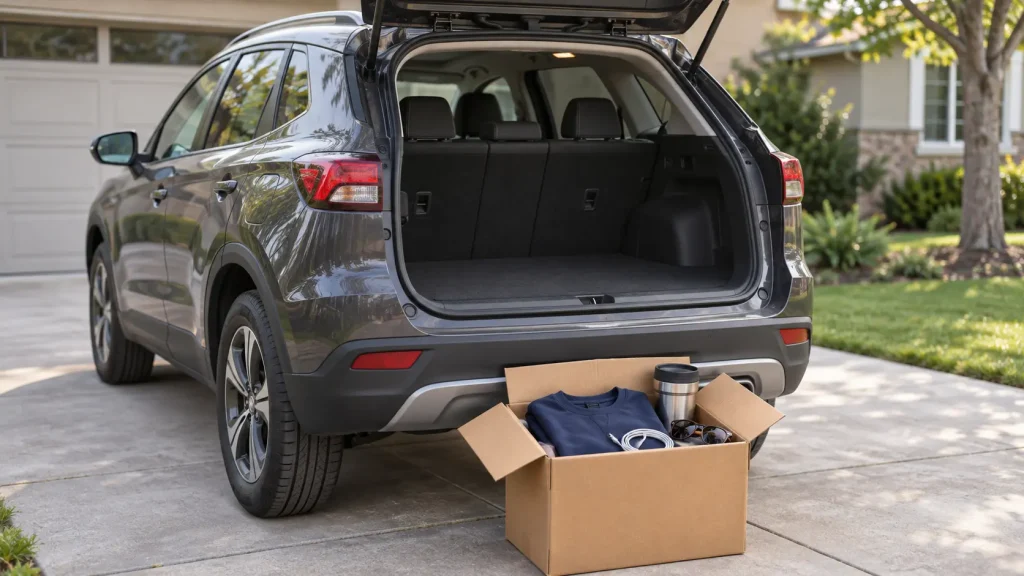
A quick sweep of the seats is where most people stop, and it misses plenty. Start with the rear cargo area and lift the panel over the spare-tire well. Then pull up the floor mats and check under any loose carpeting. Run a hand along the seat rails, where phones and rings slide out of sight. Finish with the door pockets, sun visors, and seatback pockets.
Think of it like moving out of a rental. You check every cabinet in order, because the one you skip is the one holding your passport. Working from back to front gives you that fixed route, so nothing gets missed during a rushed final pass.
Why Transponders and Papers Matter
An E-ZPass left on the windshield keeps billing your account every time the new owner hits a toll plaza. The charges continue until you remove the device and take the plate off your account. Personal documents carry their own risk. Old repair orders and loan statements often show your address or VIN, so shred them rather than tossing them in the trash.
Expert tip: Before handoff, photograph the odometer and every angle of the interior. These dated photos show the car’s condition if a question comes up later.
Some things should stay with the car. Leave the owner’s manual, every key for that vehicle, and the wheel-lock key, because buyers notice when it’s missing. Service records are worth keeping in a folder. Hand them over if the buyer asks.
How to Wipe a Connected Car
Your car remembers more than your phone does. It stores where you live, who you call, and the code that opens your garage. A lot attendant or the next owner can pull all of it up in seconds. Clear it in this order so nothing slips through.
- Delete each paired phone. Remove the device under Bluetooth settings, then delete its stored profile separately, since many systems keep both.
- Clear contacts, call logs, and text remnants that synced from those phones.
- Wipe saved navigation destinations, including the Home and Work presets.
- Erase HomeLink garage codes. On most mirrors, hold the outer two buttons for about 20 seconds until the light flashes.
- Remove driver profiles, Wi-Fi hotspot credentials, and digital keys.
- Delete saved payment methods for fuel, parking, or in-car app subscriptions.
- Run the infotainment factory reset, then restart the system and confirm nothing came back.
Does a Factory Reset Erase Everything?
For on-board data, usually yes. A reset typically clears contacts, your home address, and stored garage codes. It does not unlink the car from your cloud account, though. I’ve seen sellers reset the screen and still get remote-start alerts weeks later.
Cut the Cloud Connection
Open FordPass, myChevrolet, the Toyota app, or the Tesla app and remove the VIN from your account. Revoke any phone keys or key cards there too. Then cancel connected-service plans like OnStar or Toyota Connected Services so billing stops. Refresh the app and make sure the car no longer appears. A screenshot of the “vehicle removed” confirmation gives you quick proof if a billing question surfaces after the sale.
Parts You Should Never Pull Off
A buyer prices your car as a whole machine. Most offers assume the catalytic converter, battery, wheels, engine, and transmission are all present and attached. Pull one of them before the inspection, and the number drops. Sometimes the deal ends on the spot. Leave these in place until the car changes hands:
- Catalytic converter and full exhaust system
- Battery, alternator, and starter
- Wheels and tires, including the spare
- Engine, transmission, and drivetrain parts
- Seats, airbags, and factory infotainment units
Damaged and Non-Running Cars Need Extra Care
Owners of dead or wrecked cars feel the strongest urge to strip them. The thinking goes that a good set of rims or a fresh battery can sell separately for extra cash. That plan usually backfires. Buyers who handle salvage-title and non-running vehicles often value them on parts and metal content, so removing those parts lowers the very figure you hoped to beat.
Expert tip: Before you touch a wrench, ask the buyer one question: “Does your offer assume a complete vehicle?” The answer tells you exactly what must stay.
Cash buyers who quote salvage, non-running, and no-title cars as they sit can only hold that quote if the car shows up complete. Our post on selling a non-running car explains how those offers are built.
Accessories Versus Vehicle Equipment
Your own add-ons are a different matter. Dash cams, aftermarket stereos, and roof racks can come out, but agree on it with the buyer first. Reinstall the factory radio if you still have it. If you don’t, say what is missing up front so the offer doesn’t change at inspection. The aftermarket-parts guide covers when upgrades add value.
Before Payment and After Payment in Pennsylvania
A clean sale comes down to two short lists. The first protects you before money changes hands. The second closes every loose end once the car is gone.
Before You Take the Money
- Get the offer in writing, with the amount and any conditions spelled out.
- Have the title ready, or your lender’s name and account number if there’s a loan.
- Remove personal items, toll transponders, and garage remotes.
- Take your own dated photos of the odometer, interior, and body.
After the Car Is Sold
- Handle your license plate.
- Tell your insurance company the car is sold.
- Deal with the registration.
- Keep signed copies of the title transfer and bill of sale.
Should You Remove Your License Plate?
In Pennsylvania, plates generally belong to the owner, not the car, so most sellers take them off. The details can differ between a private sale and a sale to a licensed dealer or buyer, especially with transfers and returns. Check the PennDOT vehicle services page for your exact situation rather than relying on a general rule.
The Cases National Guides Skip
Most checklists assume you have a clear title in hand. Real sales in Harrisburg, Lancaster, and Cumberland County often don’t look like that. A local cash buyer handles these cases routinely:
- Loans or liens. The buyer gets a payoff quote, pays the lender directly, and gives you any equity.
- Salvage titles. These are bought outright, with the price based on condition and parts value.
- No title or missing paperwork. The buyer walks you through replacement or other documents PennDOT accepts.
Sell To Cramer has handled all three for decades. Family-owned since 1939 with same-day payment and no haggling, the team gives real written offers in about 60 seconds. For the full document list, see our car-selling paperwork guide. Once the glovebox is empty and the apps are unlinked, find out what your car is worth and walk away paid the same day. Get My Cash Offer
Frequently Asked Questions
What should I do if I already sold the car and forgot something inside?
Contact the buyer as soon as possible and describe the item and where you left it. Dealers and cash buyers often hold vehicles for a short time before reconditioning or moving them, so a quick call gives you the best chance of getting it back. If you left an E-ZPass behind, remove the plate from your toll account right away so new charges stop.
Do I need to wash or detail the car before selling it?
A basic cleanout is enough for most sales, since the buyer prices the car on its condition, mileage, and equipment. Removing trash and personal items makes the inspection faster and shows the interior clearly. A professional detail rarely returns more than it costs on a cash sale.
Should I remove my aftermarket stereo if the factory radio is gone?
You can, but tell the buyer up front that the dash will be missing a unit. A car with an empty dash opening usually gets a lower offer than one with a working stereo, aftermarket or not. If the upgrade cost a lot, ask the buyer whether leaving it in changes the number before you pull it.
What happens to my old registration card and insurance card?
Take both out of the glovebox and keep them until the sale is complete and your insurer confirms the policy change. After that, shred anything showing your address, policy number, or VIN instead of throwing it away. Cancel or transfer your coverage once the car is gone, not before.
Can I sell my car if I can’t find every key?
Yes. Hand over every key you have, along with the wheel-lock key if your car uses one. Missing keys can lower an offer because replacing modern key fobs is expensive. Mention it when you request your quote so the number reflects the car as it really is.